
Cipher and Decipher
It may be roundly asserted that human ingenuity cannot concoct a cipher which human ingenuity cannot resolve. Edgar Allan Poe


cipher(n.)
late 14c., “arithmetical symbol for zero,” from Old French cifre “nought, zero,” Medieval Latin cifra, which, with Spanish and Italian cifra, ultimately is from Arabic sifr “zero,” literally “empty, nothing,” from safara “to be empty;” a loan-translation of Sanskrit sunya-s “empty.” Klein says Modern French chiffre is from Italian cifra.
The word came to Europe with Arabic numerals. From “zero,” it came to mean “any numeral” (early 15c.), then (first in French and Italian) “secret way of writing; coded message” (a sense first attested in English 1520s), because early codes often substituted numbers for letters. Meaning “the key to a cipher or secret writing” is by 1885, short for cipher key (by 1835).
Figurative sense of “something or someone of no value, consequence, or power” is from 1570s.
cipher(v.)
also cypher, 1520s, “to do arithmetic” (with Arabic numerals), from cipher (n.). Transitive sense “reckon in figures, cast up” is from 1860. Meaning “to write in code or occult characters” is from 1560s. Related: Ciphered; ciphering.
1520s, “find out, discover” (a sense now obsolete); 1540s, “interpret (a coded writing, etc.) by the use of a key,” from de- + cipher (v.). Perhaps in part a loan-translation from French déchiffrer. From c. 1600 in the transferred sense of “discover or explain the meaning of what is difficult to understand.” Sense of “succeed in reading what is written in obscure or partially obliterated characters” is by 1710. Related: Deciphered; deciphering.
https://www.etymonline.com/word/cipher#:~:text=cipher(n.),%3B%20ciphering.
You thought this was going to be an article about codes and stuff. No this is about what really happens in ciphers.
A cipher is code and a decipher is to explain the code but two really never meeting. I like discover better.
We discover, we learn.
If you really to learn about ciphers. Here is a great place to start.
Decrypt a Message - Cipher Identifier - Online Code Recognizer
The AI encryption detection program is based on a multilayer perceptron (MLP). An MLP is a type of neural network composed of multiple layers of interconnected neurons, where each layer transforms the received input before passing it on to the next. This structure allows the program to detect subtle patterns in data, improve its accuracy, and adapt to different types of encryption more effectively.
At the input layer there are the coded messages (with ngrams), and at the output layer the different types of known and referenced ciphers on dCode.
Regularly the database is updated and new ciphers are added which allows to refine the results.
These days, you can put anything in AI and it will decode it for you and the identifier was wheel and you replace the letters, transposition. Cipher actually means zero but any combination of numbers and letters. Sometimes they were even smoke signals, people have always been trying to hide things from other people.
Common ciphers from classic and modern history
Classical ciphers centered on substitution and transposition of alphabet letters or numbers. These are the types of ciphers that you’ll typically read about in a standard account from historians. We’ll review the most common examples here.
Atbash Cipher
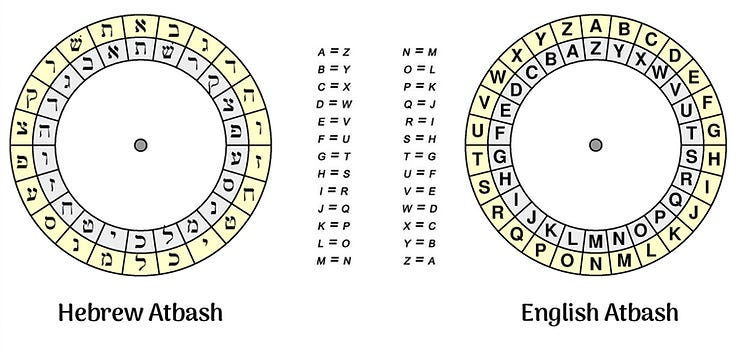
This ancient monoalphabetic cipher (single letter to single letter) began with the Hebrew alphabet. Atbash reverses the alphabet so that the first letter maps to the last, creating a simple yet historically notable encryption method.
Types of Ciphers: A Complete Guide to Early and Modern Codes
This is a more complex classical cipher that encrypts pairs of characters rather than single letters. A 5x5 grid of the alphabet is set up, with the letters I and J used interchangeably. The graphic above show how two-letter bigrams are used to define end points of a rectangle. Some basic rules are then set up for how letters are swapped within that rectangular shape.
Gematria
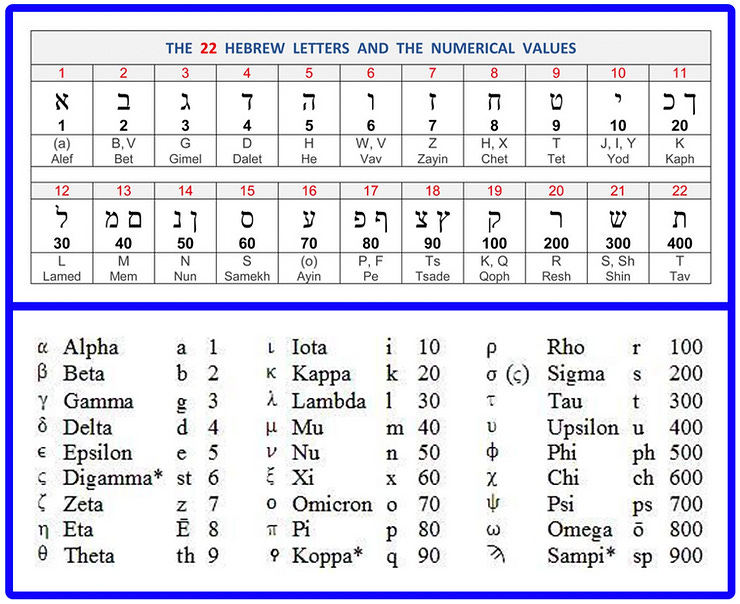
This alphanumeric system substituted each letter for a numerical value. It was common in both ancient Hebrew and Greek civilization. They each used alphabet letters to count as part of every day life. However, the religious practitioners privately added up the numerical value of words and saw mystical significance when two words had the same numerical value.
Caesar Cipher
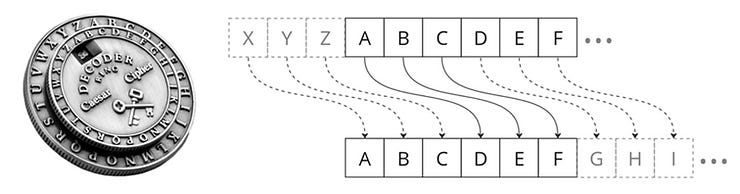
Julius Caesar popularized this simple substitution technique by shifting the plaintext letter by a fixed number within the alphabet. While easy to implement, it was the simplest to decode and vulnerable to interception. If an outsider notices the repeated use of certain phrases like “a” and “the”, they can use that to quickly break the code.
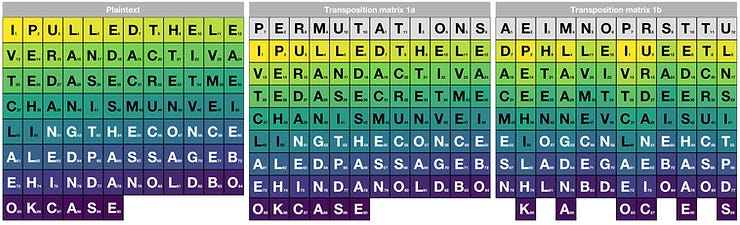
Columnar Transposition Cipher
A musical cipher.
What is a Musical Cryptogram?
A musical cryptogram is a series of music notes generated from text.
When someone refers to “the words of a song” we usually think of lyrics. But what if there was a second, more mysterious type of musical word? A word that was never spoken aloud and yet, could be heard by those with ears to hear...
In August 2022, Scottish composer Lomond Campbell revealed footage of a new modular synthesizer he called the Unsung Machine. The device correlates English alphabet letters to individual MIDI pitches. Alongside the eight-wheel encoding device is a recording wheel for storing words and play wheel that acts as three-way cross fader.
To understand the cultural roots of these modern musical devices, we’ll need to travel back in time, to their early origins in “musical cryptograms”.
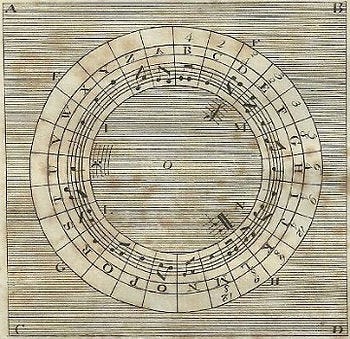
Origins of the Musical Cryptogram
In ancient Rome, powerful people like Caesar required a way to pass messages between each other in secret. One of the most popular methods was used by the emperor so often that it was named after him!
The Julius Caesar cryptogram is based on an encryption method called substitution. This means that one letter is subbed out for another. So it could be that A=C, B=D, C=E, and so forth. When you’re done swapping in the new music note letters, the final phrase looks like gibberish and nobody can read it. Unless they have the key, of course.
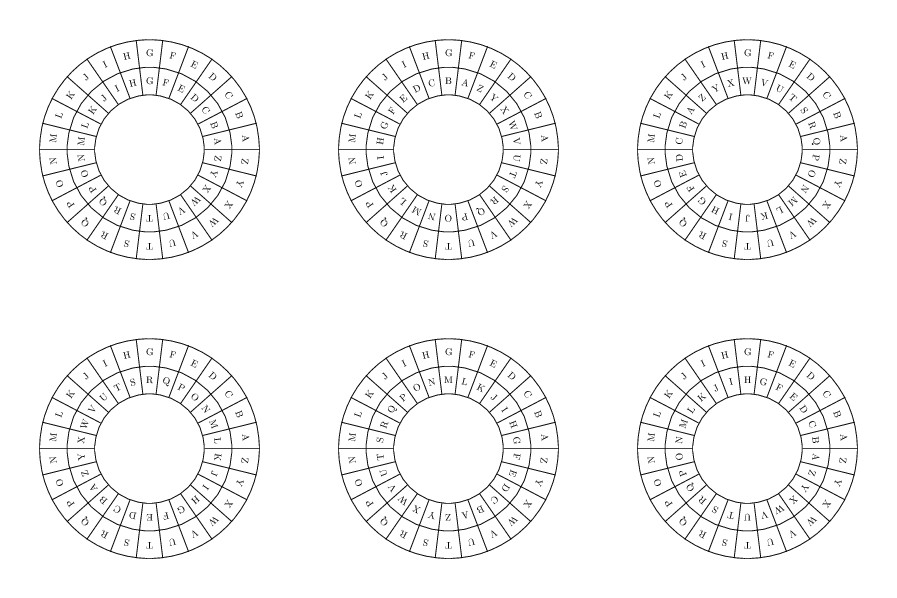
Use of Musical Cryptograms by 17th Century Spies
Musical codes changed the game for spies in a small but meaningful way, as early as the 17th century. To exchange messages securely, they would use the type of cryptograms discussed above. But messages like “ASFHJ QOIW QFKL” looked suspicious whenever someone was caught with them. Your life could be on the line, even if the interceptor never deciphers the coded message.
One famous document survived this historical period and outlines the basic principles of a musical code. John Wilkin’s book Mercury, or the Secret and Swift Messenger makes claim to a technique used among the initiated to send messages that remained undetected.
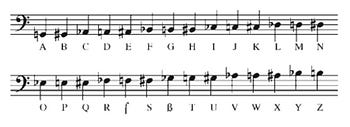
By connecting each alphabet letter with a single pitch, it became easier to write music shorthand. You could quickly write a message using music notes. But if anyone saw the sheet music and thought to investigate it, you might have a problem. Big leaps in the intervals between each note looked suspicious.
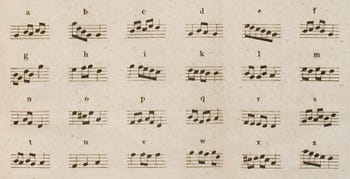
A second variation can be found in a German system published in 1804. In this cipher, each alphabet letter corresponds to a short melodic phrase. This solves the problem of melodies that look unnatural, due to jumping all over the place. But if the message was too long, the redundancy of melodies could become obvious at a glance and give away the pattern.
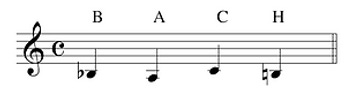
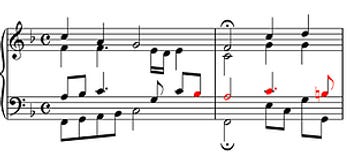
J.S. Bach was the first major composer to take up this kind of system for creative purposes. He didn’t need to rely on a substitution cipher though. Bach took advantage of the fact that German musical scales had eight notes labeled A-H and used those note to spell his name in a song. Thus “B-A-C-H” became a four note melody for his compositions, most notably in the Art of the Fugue.
Being able to decipher things is just to learn difficult things. Try the ciphers and see what Alan Turing did. This is why we have all of those codes now on the phone.
Have fun with the original coding.