
Flower Moon
To see a world in a grain of sand and heaven in a wild flower Hold infinity in the palm of your hand and eternity in an hour. William Blake

The Flower Moon is on May 1 at 1:23 pm EST on Beltane in the constellation Libra
The micromoon or blue moon in on May 31
Meaning of a Blue Moon
In America, ‘blue moons’ were calculated every year and listed in the Maine Farmers’ Almanac starting in the 19th century and continuing on into the early 20th century. Instead of using the calendar year that we are used to, which runs from January 1st through December 31st, the almanac used what is called the ‘tropical year,’ which extends from one winter solstice, usually around December 20 (the “Yule”), to the next. Most tropical years contain 12 full Moons — three each in winter, spring, summer, and fall — and each of those full moons is named for an activity appropriate to the time of year (Easter Moon, Harvest Moon, Yule Moon, etc.). But every once in a while a tropical year contains 13 full Moons, so one season has four full moons instead of just three, hence the ‘blue moon.’
The almanac also names all the full moons, including blue moons, at the beginning of each tropical year calendar. But the interesting twist is that the blue moon is the third full moon in the season that has four. Why the third moon rather than the fourth, you might ask? That is because other full moons with other special names have to fall at their correct times of the year. This rule made it all work out on the calendar according to the almanac.
What is a blue moon? Is the moon ever really blue? | Library of Congress
May moon is between Litha and the summer solstice and to release what no longer serves you and release your inner truth. Libra and Gemini.
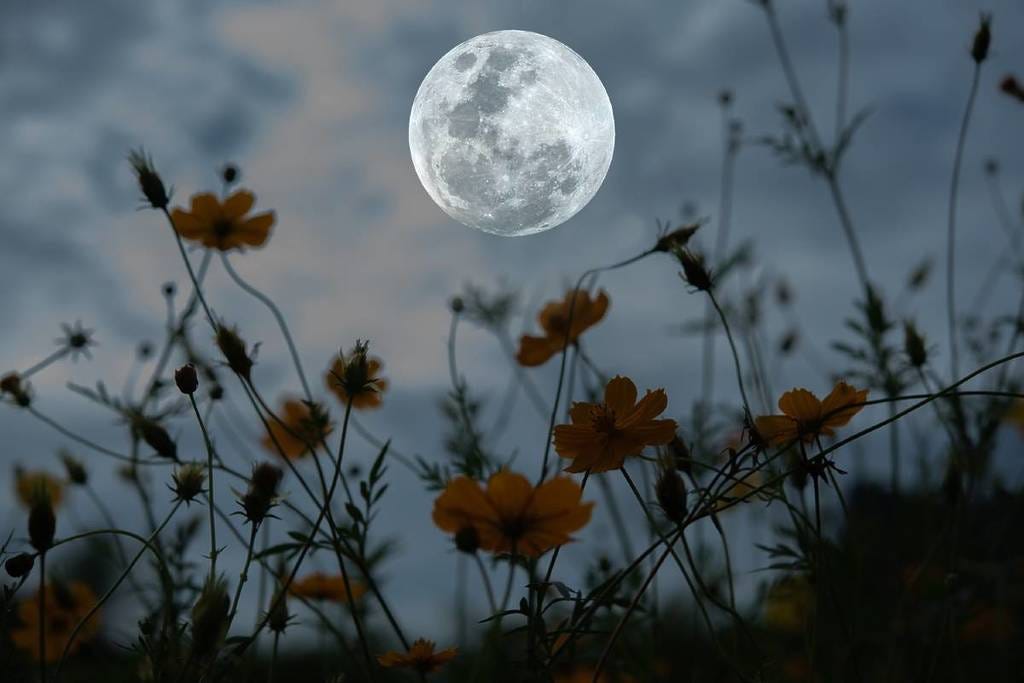
The original source for its name has been attributed to Algonquin peoples, an Indigenous group hailing from western Quebec and Ontario, Canada.
You can tie this moon beautifully into your elemental series:
Earth: soil, roots, physical growth, flowers
Water: sap flow, nourishment, emotional expression
Fire: passion, attraction, desire, vitality
Air: scent, pollination, communication, movement
The Flower Moon is unique in that it activates all four elements simultaneously, creating a sense of full-spectrum aliveness.
I am the water element and my birthday month at the end of the month. Water will flow and nourish. This has been a year of growth and inspiration. My emotional inspiration comes in the blooms and blossoms of the month. My water energy works with the earth to cleanse purify the earth. My courage and writing have shown that I am strong person who can wade through pain and bring strength in t he darkness. Sometimes I feel the light within me of learning and sharing my wisdom through the stage of the crone and the raven. The raven is both dark and light.
May is such an interesting month in my opinion.
May 1 is Beltane.
What is Beltane?
The 1st of May emerged as a Mayday celebration during the medieval period throughout the British Isles, when a series of eccentric community-led activities took place. A random ‘lord and lady’ would be picked out from the crowd to rule the town for the entire day. Eventually over time the tradition changed to involve just the ‘lady’, who became known as the ‘May Queen.’ During the Victorian era the May Queen was typically a young girl, who wore a white dress and a floral crown, who came to embody the innocent and hopeful beauty of spring, surrounded by a ‘court’ of other girls dressed in similar attire. Meanwhile, the practice of dancing around the maypole with long ribbons that has become so synonymous with Mayday today first emerged out of 14th century Wales, before being adopted across much of England and beyond.
What Is the History and Significance of Mayday? | TheCollector
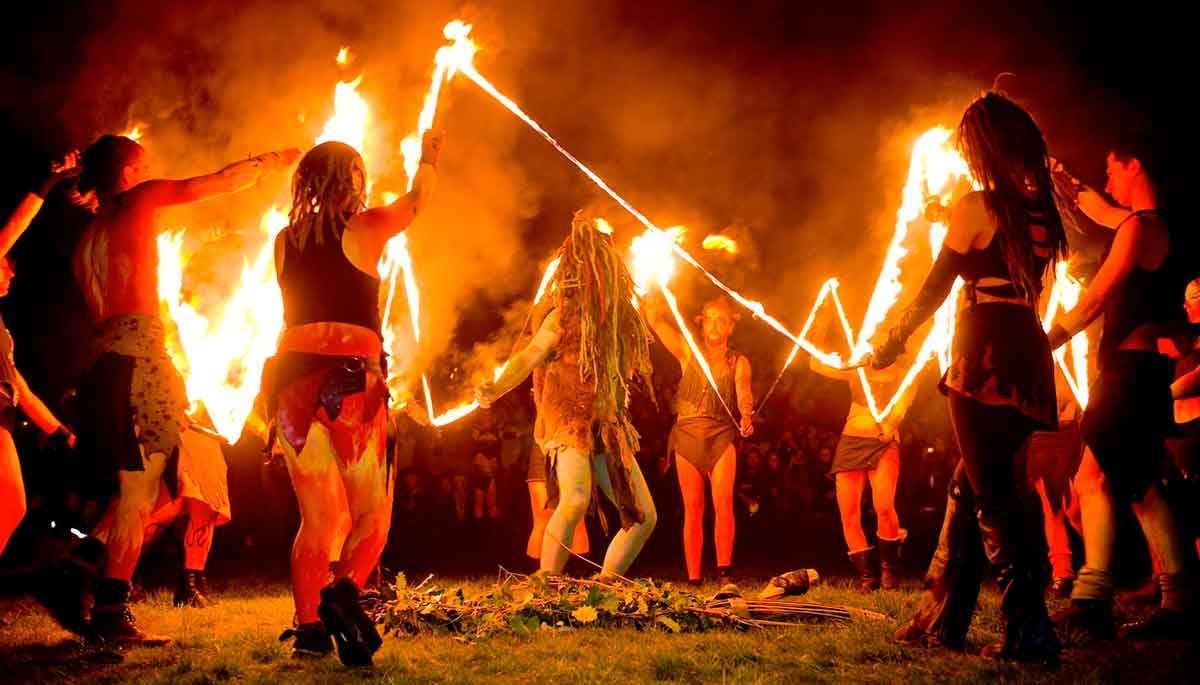
Celtic beliefs often embraced the duality of light and dark, which is particularly poignant during Beltane. The festival acknowledges the balance between the two forces, celebrating the light’s triumph over darkness as the days grow longer and warmer.
The lighting of bonfires is one of the most iconic traditions of Beltane. Communities gather to ignite massive fires, often using wood and other natural materials. Participants may:
Jump over the flames for purification.
Light torches from the bonfire to carry home, symbolizing good luck and fertility.
Use the ashes from the fire to bless crops and livestock.
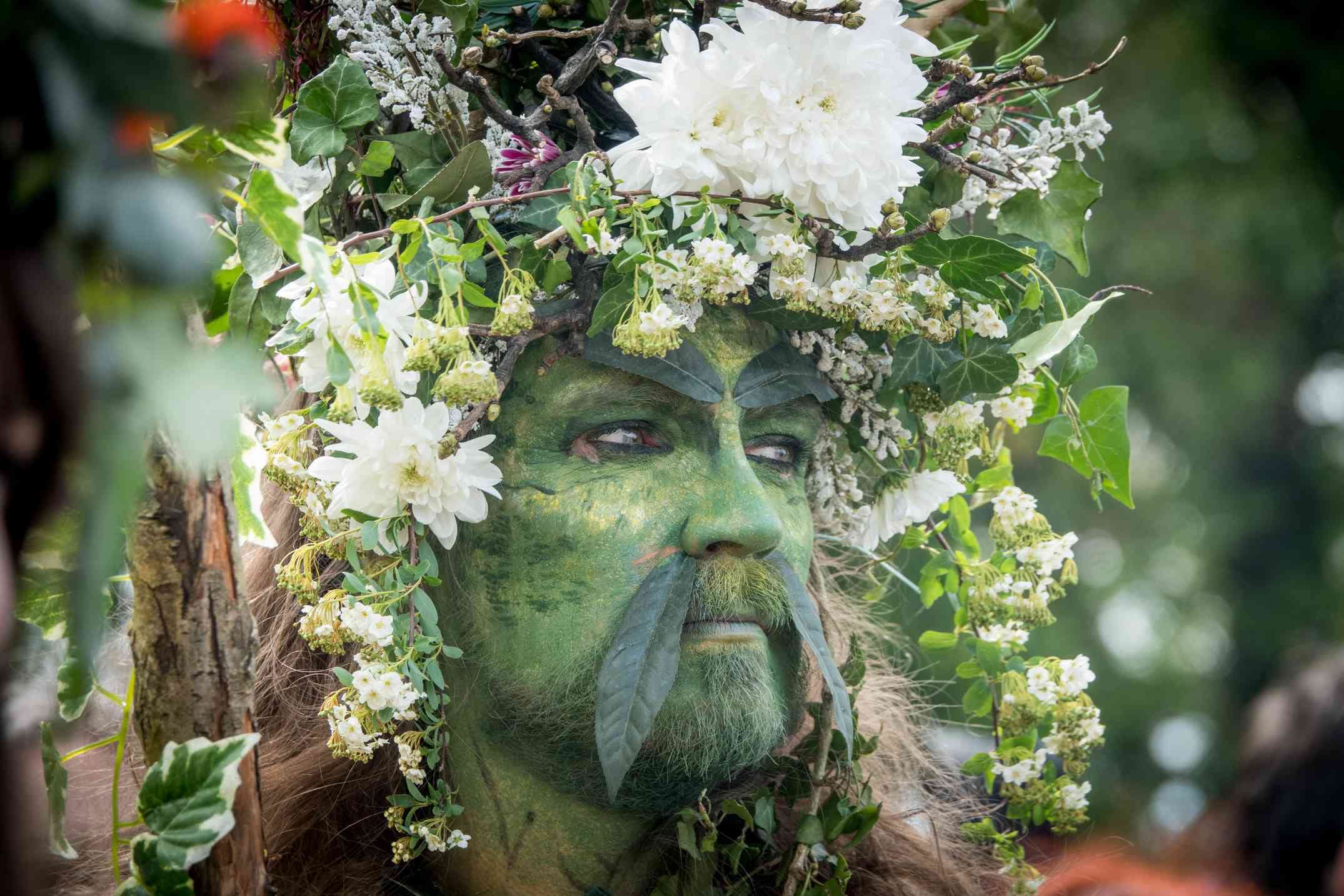
The May Queen and the Green Man are central figures in Beltane celebrations. The May Queen represents fertility and the blossoming of life, often chosen from among the community’s young women. The Green Man symbolizes nature and rebirth, embodying the spirit of growth and renewal. Together, they are celebrated in rituals that honor the earth’s cycles.
Beltane: A Celebration of Life, Love, and Fertility - Celtic Mythology
Fertility and love are at the heart of many Beltane legends. The festival is traditionally seen as a time for romantic unions, and numerous myths highlight the idea of love blossoming in tandem with the arrival of spring. In some traditions, Beltane was considered an optimal time for matchmaking, with young couples often participating in rituals designed to attract love and ensure fertility.
One popular legend involves the union of the May Queen and the Green Man, symbolizing the sacred marriage between the earth and its people. This union serves as a metaphor for the fertility of the land and the interconnectedness of all life, demonstrating how love and nature are intertwined.
Beltane: A Celebration of Life, Love, and Fertility - Celtic Mythology
The Green Man:
The Green Man is a mythical figure often depicted as a face or human-like figure made of or surrounded by leaves, branches, and vines. As the guardian of the forests and the embodiment of nature’s life force, the Green Man represents growth, renewal, and the powerful connection between humans and the natural world.
This symbol can be traced back to pre-Christian times and has been found in various cultures around the world, including ancient Roman, Egyptian, and Celtic art. The Green Man is also believed to be influenced by the Celtic god Cernunnos, whom is also associated with fertility, and the untamed aspects of nature.
During Beltane, the Green Man is celebrated as the spirit of the wildwood, awakening from his winter slumber to bring life and energy back to the earth.
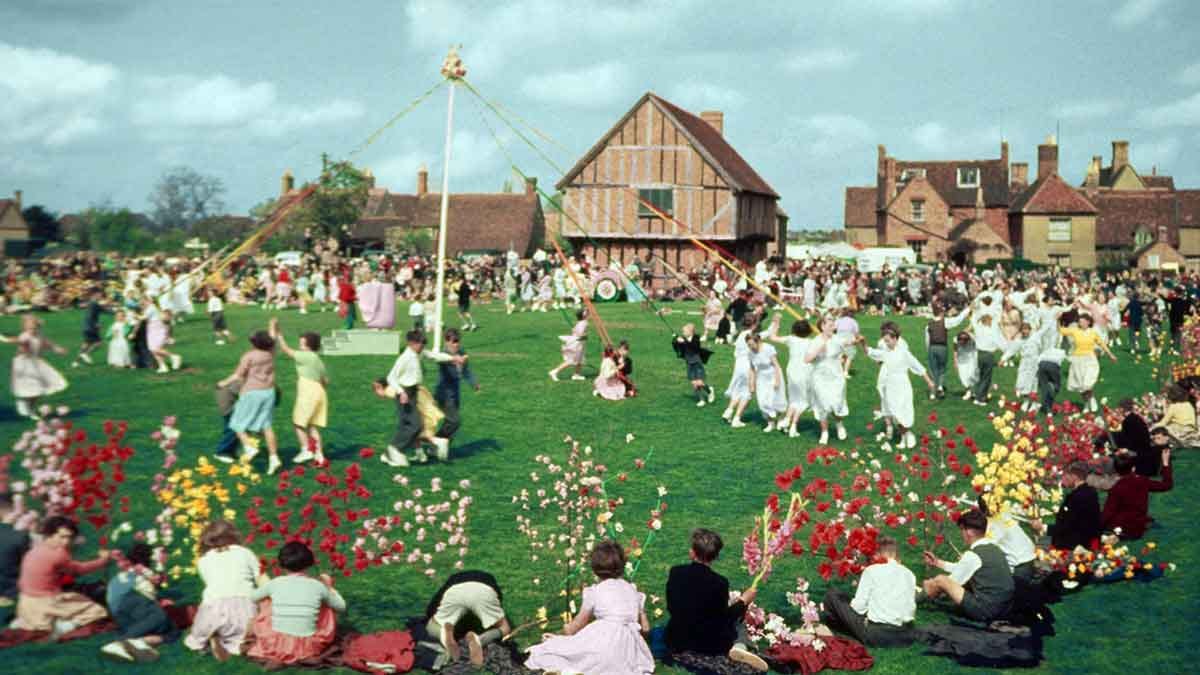
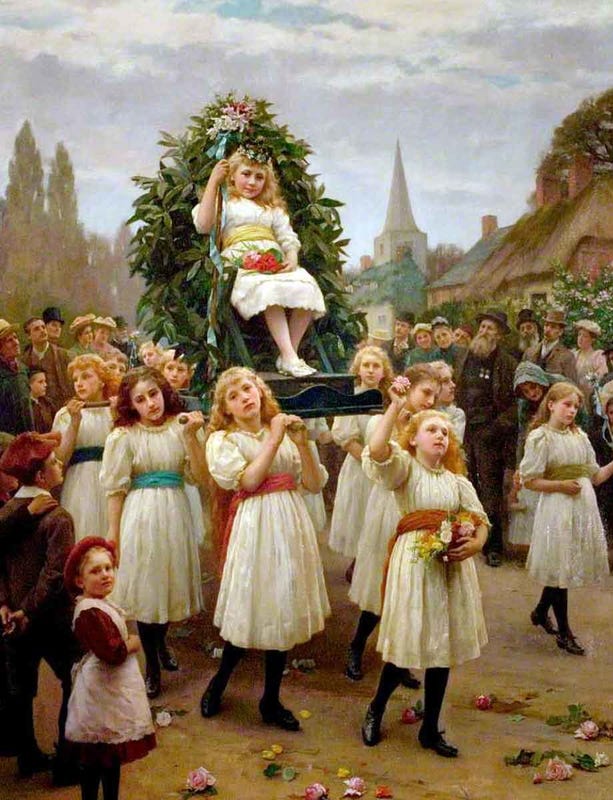
The May Queen is the embodiment of love, beauty, and fertility, often depicted as a young woman adorned with flowers and wearing a crown of blossoms. She symbolizes the arrival of spring and the power of new beginnings. In many Beltane celebrations, a local girl is chosen to represent the May Queen, leading a procession and presiding over the festivities.
The concept of the May Queen can be traced back to early European pagan traditions, where the goddess of spring and fertility was celebrated as the earth awakened from its winter slumber. In some cultures, the May Queen is also associated with the Roman goddess Flora, the Norse goddess Freyja, and the Celtic goddess Brigid, each representing different aspects of love, beauty, and fertility.
The sacred marriage between the Green Man and the May Queen represents the union of male and female energies, the balance between the natural world and human spirit, and the renewal of life. This union is often re-enacted in Beltane rituals and plays, emphasizing the interconnectedness of all living beings and the cyclical nature of life.
The Green Man and the May Queen embody the essence of Beltane, representing the interplay of light and darkness, life and death, and the perpetual cycle of the seasons. These powerful symbols remind us of the importance of balance and harmony in our lives and the natural world.
The Green Man and the May Queen: Embodying Beltane's Essence - Sacred Isles
Greek Influences
The fire festival of Bona Dea was also celebrated on May 2nd. This celebration, held at Bona Dea's temple on the Aventine Hill, was a festival of women, mostly plebian, who served as priestesses and sacrificed a sow in the fertility goddess' honor
Bona Dea (Roman): This fertility goddess was worshipped in a secret temple on the Aventine hill in Rome, and only women were permitted to attend her rites. A woman hoping to conceive might make a sacrifice to Bona Dea in hopes that she would become pregnant.
What was the Bona Dea Festival?
The Romans honoured Bona Dea as a goddess responsible for fertility and chastity, and they believed she could heal the faithful.
Her true name stayed a secret known only to her priestesses, and her worship was strictly limited to women.
Male participation in her rites was forbidden, and even knowledge of the ceremonies was considered inappropriate for men.
The ceremonies for her included prayers, sacrifices, and musical performances, although the Roman women did not reveal the specific practices.
During December, a private ceremony took place in the home of a senior magistrate or priest, which in 62 BC meant formal residence of the Pontifex Maximus.
Julius Caesar had recently been appointed to the role and had given responsibility for hosting the festival to his wife, Pompeia.
The household removed every man before the rituals began, including the servants.
Household members cleansed the rooms and draped garlands on altars. Once the women arrived, they began to carry out the ceremonies.
The Vestal Virgins, though important figures in Roman religion, did not participate in the Bona Dea ceremony.
The secrecy of the event formed part of its holy nature, and any disruption posed a risk to Rome’s religious order.
Romans considered correct performance of these ceremonies to be essential, especially when the state security rested on the gods’ goodwill.
For the public, a man’s intrusion into such a space meant that the traditional boundaries between male and female spheres had been ignored and that the gods’ established order had been disrespected.
The trial of Clodius ended in a not guilty verdict, yet most Romans believed that the verdict had been bought.
The case exposed the weakness of Rome’s court system, where the rich could manipulate juries and escape punishment.
Public confidence in the courts declined, and political commentators used the event to demand reforms to the legal process.
For Clodius, the outcome preserved his career and enhanced his image as a man who challenged traditional elites.
He soon sought election as tribune of the plebs, where he gained legal power to propose reforms and target his enemies.
After formally renouncing his patrician status in 59 BC to become eligible, he won election, which boosted his popularity.
The scandal, instead of ending his career, gave him greater fame and helped him win popular support.
His vendetta against Cicero eventually led to the orator’s exile.
For Caesar, the scandal proved more damaging in the short term. It forced him to defend his position as Pontifex Maximus and to reassure his allies that he remained fit for leadership.
His rivals used the event to raise doubts about his ability to maintain religious purity and household order.
The Greeks and Plynteria
Also in May, the Greeks celebrated the Plynteria in honor of Athena, the goddess of wisdom and battle, and the patroness of the city of Athens (which was named after her). The Plynteria includes the ritual cleansing of Athena’s statue, along with feasting and prayers in the Parthenon. Although this was a fairly minor festival, it was significant to the people of Athens.
The Plynteria, like many other Greek festivals, lasted two to three days, beginning around May 25, and temples were closed to the general public. In the temple of Athena, only women performed the task of cleansing the statue, which was hidden behind a large cloth so that no one could see it during this sacred time.
On the 24th, homage is paid to the Greek moon-goddess Artemis (goddess of the hunt and of wild animals). Artemis is a lunar goddess, equivalent to the Roman moon-goddess Diana–she is also identified with Luna, and Hecate.
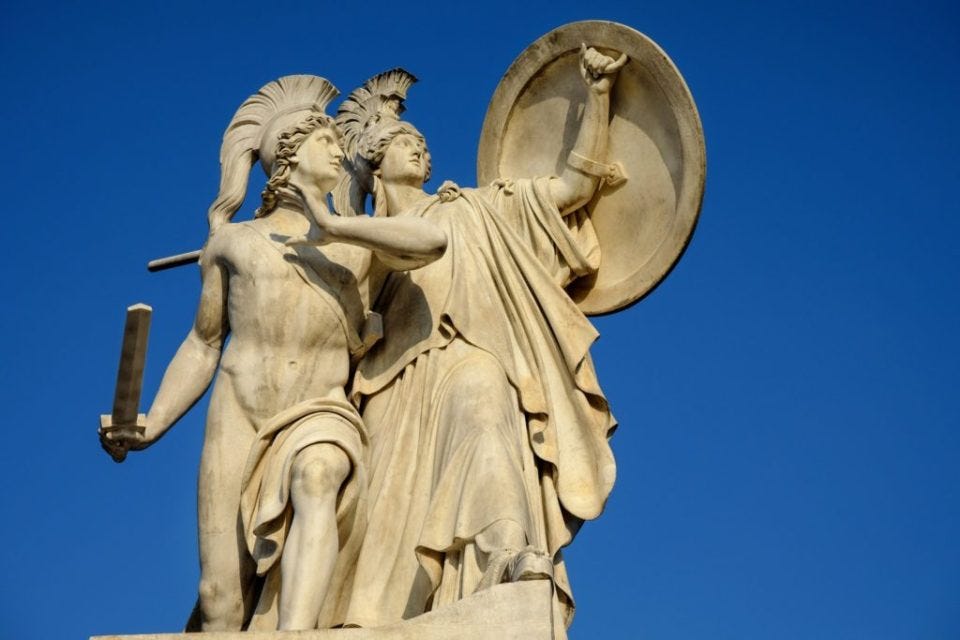
The city of Athens, Greece, is named for its protectress, the goddess Athena, and at the top of the hill called the Acropolis, there is a great temple in her honor. This temple, the Parthenon, contained a giant statue of Athena, made of ivory and adorned with gold, as a tribute to her magnificence. The residents of Athens took their relationship with their patron deity quite seriously, and every year held a spring festival in her honor, called the Plynteria. The name comes from a Greek word that means “to wash.”
The Greek Plynteria Festival – Patti Wigington
The American Indian Names of the May Moon
Source: Archeo | Native Moons | Western Washington University
Abenaki field maker moon
Algonquin when women weed corn
Anishnaabe (Chippewa, Ojibwe) blossom moon
Apache season when the leaves are green
Arapaho when the ponies shed their shaggy hair
Assiniboine idle moon
Cherokee when the horses get fat
Choctaw moon of mulberry
Comanche frog moon
Creek mulberry moon
Haida food-gathering moon
Hopi moon of waiting
Kalapuya camas blooming time
Lakota moon of the green leaves
Mohawk time of big leaf
Omaha little frog moon
Passamaquoddy alewive moon
Ponca water stands in the ponds moon
Potawatomi moon of the strawberry
Pueblo moon when the leaves break forth
Shawnee strawberry moon
Shoshone budding
Sioux moon when the ponies shed
Tlingit moon before pregnancy
Winnebago hoeing-corn moon
Wishram the 9th moon
Zuni no name
Thank you for being patient and reading to the end. May is a month of mystery, fertility and fun facts in mid-year.
Enjoy!! Happy Blossom Moon.